

For years, many bands operated on a handshake. Friends became bandmates. Bandmates became business partners. Someone booked the gigs. Someone ran the Facebook page. Someone owned the trailer. Someone collected the money.
It worked. Until it didn’t.
Today, running a professional Music Brand means much more than turning up and playing great shows. It means everyone understands their role, their responsibilities and how the business operates.
An Internal Music Brand Agreement isn’t about distrust. It’s about removing assumptions before they become disputes.
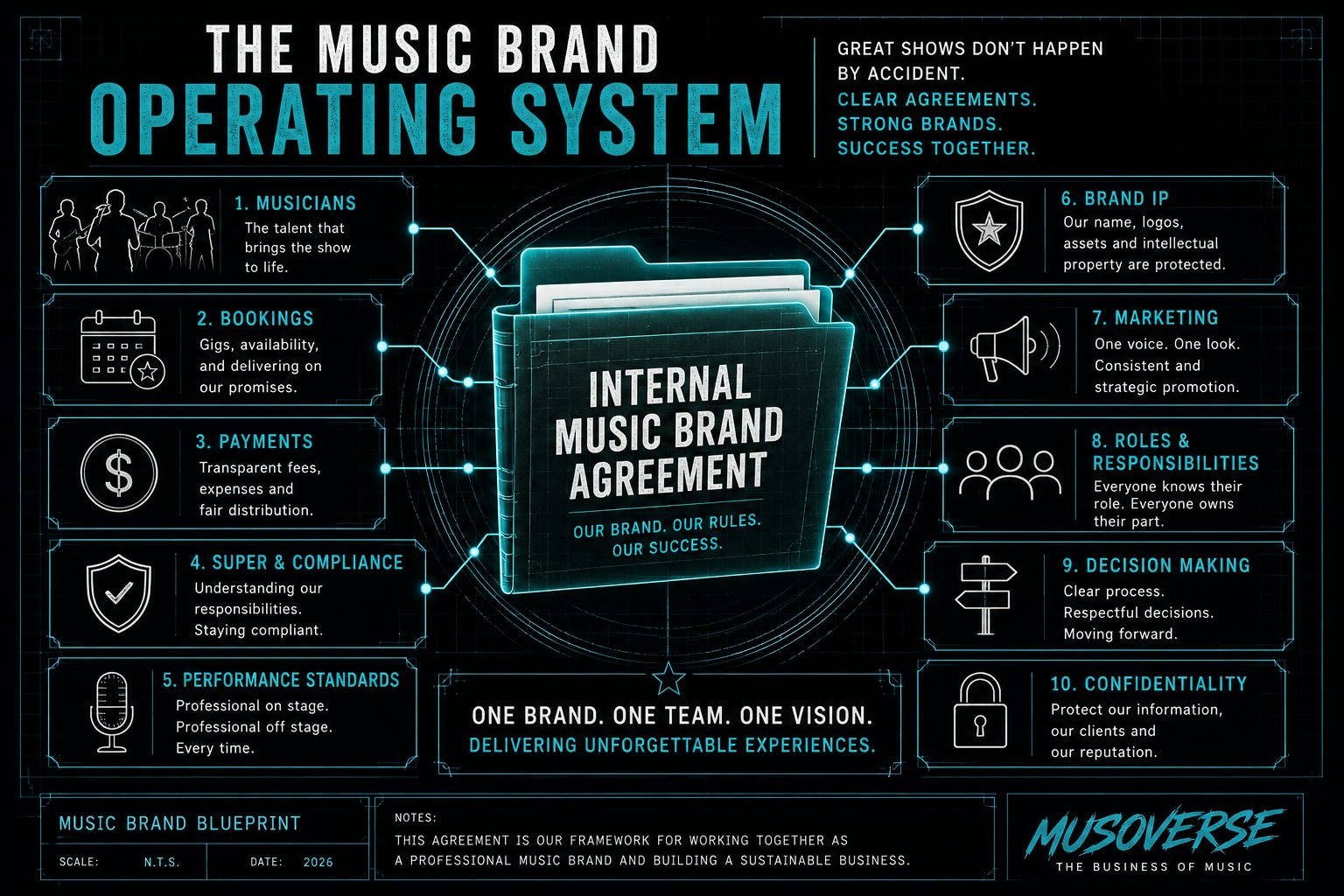
Here’s what every professional Music Brand should be documenting.
1. Purpose
Every agreement should begin with one simple question:
What business are we actually operating together?
An Internal Music Brand Agreement records how the members work together to deliver a professional entertainment product under a shared Music Brand.
It establishes expectations before the first disagreement ever happens.
2. The Relationship
This agreement defines the commercial relationship between:
the Music Brand
the Music Brand Manager
the performers delivering the show
It explains who is responsible for what. It doesn’t replace Australian law. It records how the parties intend to operate together.
3. Delivering the Show
Every performer is engaged to help deliver one outcome. A professional entertainment experience. That includes far more than simply playing the right notes. Professional delivery includes:
learning the show
arriving prepared
presenting professionally
supporting the production
protecting the reputation of the Music Brand
4. Roles and Responsibilities
Every successful Music Brand has clearly defined responsibilities.
Who:
books the gigs?
manages clients?
runs marketing?
updates the website?
maintains equipment?
handles production?
manages finances?
When everyone owns their role, the business becomes scalable.
5. The Brand
The Music Brand is one of the business’s most valuable assets. The agreement should clearly explain:
ownership of the show name
logos
artwork
costumes
promotional assets
social media
recordings
intellectual property
Everyone should know what belongs to the brand and what belongs to individual members.
6. Financial Expectations
Money causes more band break-ups than bad music. Your agreement should clearly explain:
how show fees are distributed
when payments occur
who invoices
how expenses are handled
travel costs
accommodation
production expenses
merchandise income
Transparency builds trust.
7. Superannuation and Business Responsibilities
PayDay Super has highlighted the importance of documenting business responsibilities. An Internal Music Brand Agreement should identify:
who contracts with clients
who invoices
who receives payments
each performer’s business obligations
how the Music Brand intends to administer its engagements
While an agreement cannot determine whether Superannuation Guarantee applies under Australian law, it provides important context about how the Music Brand operates and how responsibilities have been allocated between the parties. Check out this stack for information about how many bands are dealing with this.
8. Availability
Professional brands protect their reputation. That means members should:
provide unavailable dates early
communicate conflicts immediately
support substitute performers where required
The client booked the show. The audience expects the show. The agreement helps make sure the show still happens.
9. Professional Standards
Every member represents the brand. Professional standards should include:
punctuality
presentation
communication
rehearsals
audience interaction
venue etiquette
safety
confidentiality
A single poor performance affects everyone’s reputation.
10. Marketing the Brand
Marketing works best when everyone rows in the same direction. Your agreement should outline expectations around:
social media
photography
video content
promotional appearances
sharing campaigns
protecting brand consistency
Every post either strengthens the brand—or weakens it.
11. Decision Making
Not every decision requires a committee meeting. Professional Music Brands work best when everyone understands:
who makes creative decisions
who makes commercial decisions
how disputes are resolved
when consultation is required
Clarity prevents conflict.
12. Protecting the Business
Every agreement should include provisions covering:
confidentiality
client information
intellectual property
reputation
legal compliance
termination of membership
These aren’t signs of mistrust. They’re signs of a professionally managed business.
The Musoverse Take
The best bands aren’t just great musicians. They’re well-run businesses. PayDay Super has reminded the industry that informal arrangements often create formal problems. An Internal Music Brand Agreement won’t solve every disagreement. But it will answer many questions before they become expensive ones.
Because professional Music Brands don’t rely on memory. They build systems. And great systems create great businesses.
Nichola Burton is the CEO of The Pushworth Group and has spent more than 36 years helping musicians build sustainable careers beyond the stage. She believes the most successful artists think like business owners as well as performers—understanding contracts, protecting their brands and building structures that support long-term success. Through Musoverse and the Music Means Business philosophy, she encourages artists to make informed decisions, seek professional accounting and legal advice where needed, and build businesses that are as strong behind the scenes as they are under the lights. Copyright 2026 All Rights Reserved
