

One of the biggest questions we’ve received since the introduction of Payday Super has nothing to do with solo performers. It’s about bands. Or more accurately, the business owner behind the band.
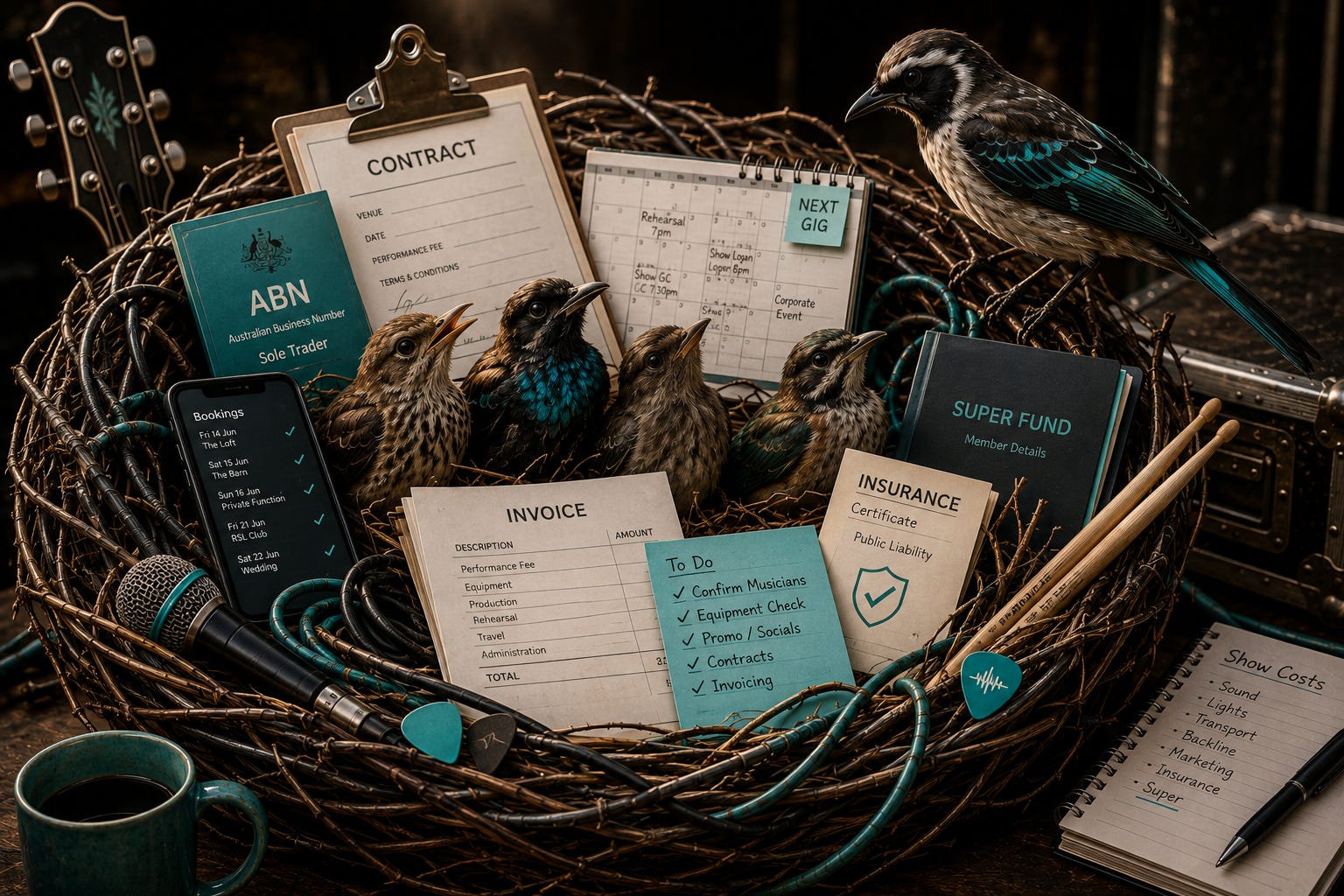
If you’re the person contracting with venues under your Sole Trader ABN, this stack is for you. You may book the shows. Negotiate the fees. Invoice for the show. Sub Contract the musicians. Arrange rehearsals. Provide equipment. Promote the gigs. Pay your subcontractors. Manage cancellations. Find replacements when someone gets sick. And ultimately make sure the show is delivered.
That’s not just playing music. That’s running quite a complex business.
When a venue books your show, unless otherwise stipulated, it is contracting with your business. It is not contracting every individual performer standing on stage. Likewise, the agent is facilitating the contract with your business, with you as the sole trader ABN holder. Neither the venue nor the booking agent is a party to the private commercial arrangements you have with the musicians you engage to help deliver your shows. Those arrangements sit inside your business.
Just as they would for a plumber employing an apprentice or a builder engaging subcontractors. Your internal arrangements are exactly that. Internal.
The music industry has never operated with a single business model. Neither should you. What we’re seeing across the industry is that artists are choosing different solutions depending on how their own businesses are set up and operate.
For example, some Sole Traders are setting up their own SuperStream clearing arrangements so they can administer Superannuation Guarantee payments to the musicians they ub contract within their own businesses. This keeps administration within the business that actually manages those performer relationships.
Others are reviewing the labour component of their contracts as the ATO (1) states that Super may apply where an independent contractor is engaged under a contract that is mainly for their labour, meaning more than half the dollar value of the contract relates to labour. For some businesses who deliver shows, the contract price also includes significant business costs such as: production, sound equipment, lighting, transport, insurance, advertising, administration, rehearsal space, subcontracted performers and other operating expenses.
Some artists are therefore working with their accountants to properly identify, receipt and document those business costs so their invoices accurately reflect the commercial nature of their business.
And others are reviewing their business structure entirely by consulting their accountant about whether a different business structure better reflects the way they actually operate. Depending on individual circumstances, that may include: Partnership, Trust or Company. The right structure depends on your own business, income, risk profile and long-term objectives. Every business is different. Professional advice is essential.
However you choose to manage your own business, simply communicate with your booking agent. If your business structure changes, your contracts should reflect that change. So should your invoices. So should your ABN details. Keeping everyone informed makes administration significantly easier.
Don’t Forget your internal Band Agreement. This might be the most important part of all. Many bands have operated for years on handshakes. Until something goes wrong. If you’re sub contracting other musicians, now is an excellent time to have a written agreement covering things such as: payments, IP, Brand, Ownership, Split, Permissions, SG, Tax, Substitute Engagements, Cancellations, Production Costs, Division of Labour, Division of Profit and Dispute Resolution pathways.
Solid agreements don’t create problems. They prevent them.
For years we’ve encouraged artists to think beyond the next gig. Build your brand. Protect your reputation. Know your contracts. Understand your numbers. Operate professionally. The current Superannuation changes haven’t altered that philosophy. If anything, they’ve reinforced it. Because whether you remain a Sole Trader, establish your own SuperStream arrangements, document your business costs more comprehensively or adopt a different business structure altogether, the decision is yours. Because after all it is your business.
So talk to your accountant. Understand your obligations. Choose the structure that best suits your business. Then let your booking agent know how you wish to be contracted. Because every successful music career eventually reaches the same conclusion.
Music doesn’t stop being art because it’s also a business. And if you’re running the business, make sure it’s structured like one and that your music means business.
Nichola Burton is the CEO of The Pushworth Group and has spent more than 36 years helping musicians build sustainable careers beyond the stage. She believes the most successful artists think like business owners as well as performers—understanding contracts, protecting their brands and building structures that support long-term success. Through Musoverse and the Music Means Business philosophy, she encourages artists to make informed decisions, seek professional accounting and legal advice where needed, and build businesses that are as strong behind the scenes as they are under the lights. Copyright 2026 All Rights Reserved
