

Hey great gig last night. By the way you rocked! Remember us? We were the punters hogging the dance floor all night. You know, the people standing on the other side of all those conversations the music industry keeps having about live music.
We don’t know what your guarantee is. We don’t know what your Agent charges. We don’t know how many rehearsals you did, what your insurance costs, whether the Venue supplied production or why somebody is currently furious about the load-in. We probably don’t know how many followers you have either. And, with respect, we don’t really care.
We came out tonight for us. We have been working all week. We’ve dealt with bosses, staff, kids, parents, traffic, bills, grocery prices, relationships, deadlines and a phone that apparently believes we should be contactable by everybody we’ve ever met for 24 hours a day. We’re tired and friggin over it.
We could have stayed home. Home is actually pretty good these days. We have streaming services. Food delivery. Big televisions. Music on demand. A comfortable couch. Wine in the fridge.
You are competing with all of that.
So if we’ve showered, found something to wear, rounded up our mates, organised the kids, booked an Uber, driven across town, found a park, walked through the door and handed over our money… please understand what we’ve paid for.
We are not funding your labour. We are buying an experience.
Take us somewhere. Please. We want you to make us feel something. Make us dance. Make us laugh. Make us sing. Make us forget ourselves for a while. Play the song that takes us straight back to the summer we were nineteen and thought we knew absolutely everything. Give us the chorus that makes an entire room turn around and grin at complete strangers. Give Dad the song he played in the car when we were kids. Give Mum her favourite Fleetwood Mac song. Give us AC/DC so loud we temporarily forget our knees aren’t what they used to be. Give us some Bruno and Foo Fighters. Cotton Eye Joe. Horses. A little Bon Jovi. Spice Girls. Greenday. A bit of Kylie. The Angels. Pauly and Fat Pizza. Some chick trying to belt out Mr Brightside. A DJ who knows exactly when to drop the song everybody has been waiting for. And throw in some Alex Warren.
Read the room. Notice us. Talk to us. Feel when you’ve got us and know when you’re losing us. Don’t perform at us for three hours. Bring us with you. Because the great entertainers understand something that technically brilliant performers sometimes don’t.
The gig isn’t happening on the stage. It’s happening in the space between you and us. That’s where the magic is.
And Please Don’t Tell Us What We Should Value. This is where things get a little awkward. We hear a lot about what live music should be worth. What musicians should be paid. What Venues should spend. What tickets should cost. Which music should receive support. We understand everybody needs to make a living. So do we.
And we’re the ones reaching for our wallets.
You can calculate what something needs to cost. But you can’t calculate what we will value. We’ll tell you that. We tell you every weekend. We tell you when tickets fly out the door. We tell you when nobody buys them. We tell you when the dance floor fills. We tell you when the bar empties halfway through the second set. We tell you when we bring twelve friends next time. We tell you when we never come back. We tell you when a show becomes something we talk about for weeks.
That is market feedback. It isn’t always fair. It certainly isn’t always sophisticated. But it’s real. And if you’re running a music business, you need to listen to it.
Give Us Somewhere Worth Going. Now let’s talk about Venues. We don’t particularly need another building with beer in it. There are plenty of those. Give us somewhere that means something. Become the place we go on Sunday afternoon because the music is always great. Become the room that gets the brilliant tribute shows. Become the pub where everybody dances on Friday night. Become the home of country. Or rock. Or comedy. Or karaoke. Become the place where we know we’ll find our people.
Give us a reason to say: “Let’s go there.”
That’s when a Venue becomes more than a Venue. It becomes a destination where we want to be. We don’t have to investigate what’s on every weekend because we trust you. We know what you do. We know how it feels. We know there’s a good chance we’ll have a great night. So we come back. And we bring people with us.
Signed your Audience.
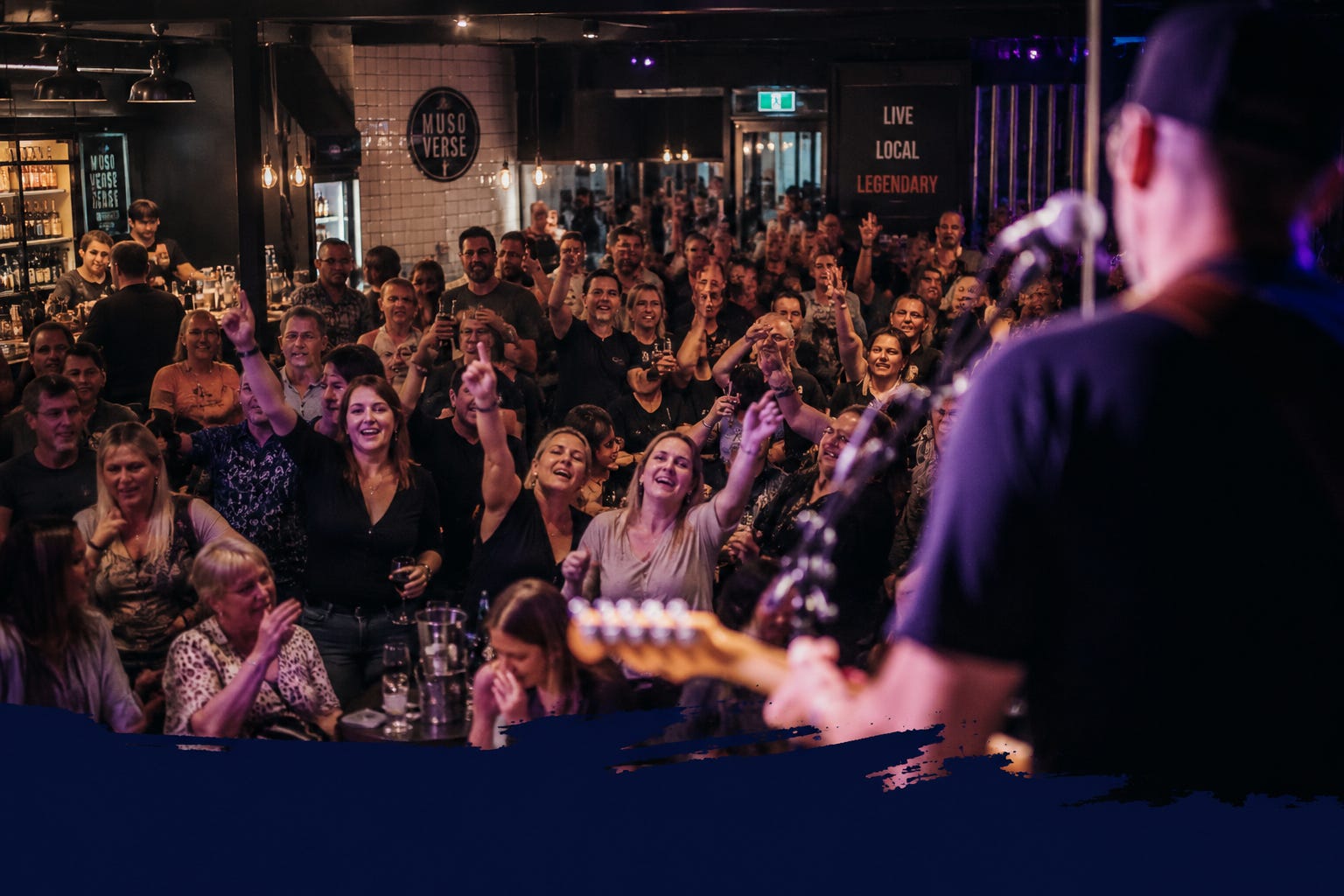
These notes came from a conversation I had with a group of mates last night as we shared a few hours in front of live band. They brought me down to earth with their observations.
“Nic, you have an audience looking for an experience, a Venue looking for an audience and an entertainer with something to offer. We are guessing that this is where you guys come in?”
Yes. This is the bit of the live music business most people never see. And probably shouldn’t have to. Between an entertainer creating a show and an audience standing in front of it is an entire marketplace. That is where businesses like Pushworth operate. Not on the stage. Not in the audience.
But in the middle.
The muso says: This is what I’ve got. The Venue says: This is the audience I’m trying to build. The market says: This is what people are currently responding to and what they’re prepared to pay. Businesses like Pushworth work between them.
Cue the daily questions that build any booking day. What is the offer? Who is likely to buy it? Where does it belong? What sort of room suits it? What price can the market tolerate? How should it be positioned? Can it tour? Is there demand? Are the promotional assets actually selling the experience? Does the Venue have the right audience for it? Can we take something an Artist has created and turn it into an offer a buyer can understand and an audience will want?
Know what this is? Translating the offer into the market.
Often that translation involves saying something an Artist doesn’t particularly want to hear. The price isn’t working. The offer isn’t clear. The show is good but you’re pitching it to the wrong market. The artwork tells us nothing. The Venue isn’t right. The audience for this isn’t where you think it is. Or the hardest one of all. People aren’t buying it.
And this is valid and important information. What the Artist does with that information is where the business begins.
Follow the Money and You Find the Audience. Where does the money actually enter this ecosystem? Ultimately, it comes from the audience. The tickets that they buy. The beers. The meals. Their night out. Their decision to leave home. One person spends $80. Another spends $180. A couple makes a night of it and spends $400. Multiply that across a room. Across a weekend. Across hundreds of Venues. Across Queensland. Across Australia.
And that money is paying for bar staff, security, artists, musicians, DJs, sound engineers, lighting operators, crew, management, ticketing companies, promoters, graphic designers, photographers and PAs. The booking systems, accountants, insurers, marketers, transport operators and all the other businesses attached to this strange little ecosystem get their slice. Then those people go home and spend their money somewhere else.
All this economic activity started because somebody decided to go out.
That is why the audience cannot be an afterthought in conversations about supporting live music. They are the source of its commercial vitality and stand in the centre of the musoverse.
As an artist, you are not there to perform songs. You are creating the reason somebody came. That’s a much bigger job. It means understanding the room. Understanding the audience. Understanding what you’re promising when somebody sees your poster. Understanding that the person buying a ticket doesn’t owe you their attention simply because you worked hard.
You have to win them. And then keep them. The extraordinary entertainers know how to do this. I’ve watched them walk into rooms full of people who barely know who they are and own the place twenty minutes later. Not because they’re necessarily the best musician in the room. But because they totally get punters.
They know when to push. When to pull back. When to talk. When to shut up and play the bloody song. They understand that entertainment is an energy exchange. And when that exchange works, audiences become advocates. They tell their friends. They buy another ticket. Venues want the Artist back. Agents can sell more dates. Shows become tours. Businesses grow.
We spend a lot of time asking how the industry can support Artists. But I think there’s another one we should be asking much more often.
How do we create experiences audiences can’t wait to buy?
Get that right and the energy moves through the entire ecosystem. The Artist creates the offer. The Agent takes it to market. The Venue gives it a home and builds a destination around it. The audience buys the experience. And that money flows back through hundreds of businesses and thousands of people who make live entertainment possible.
Then everybody gets to do it again next weekend. And the week after. And the week after that.
That’s a healthy music market! Not one where everybody is fighting over their piece of a shrinking pie. One where we’re giving the audience enough reasons to make the pie bigger.
So perhaps before we decide what live music needs next, we could ask the people standing in front of the stage?
Nichola Burton has spent 35 years in the Australian live entertainment market as co-founder and CEO of The Pushworth Group. She writes about the business behind the music — audiences, Artists, Venues, Agents and the market forces that determine what actually gets booked, bought and built. Through The Musoverse, she cuts through industry mythology to explore what makes live entertainment commercially sustainable. Because loving the music is one thing. Understanding the business that keeps it playing is another.
