

Australia has a new campaign to Keep Music Live. The Media, Entertainment & Arts Alliance has launched a petition calling for live musicians to be used wherever an orchestra or band can reasonably be employed, rather than allowing recorded music and digital technology to quietly become the default. The campaign follows criticism of The Australian Ballet for using recorded orchestral music on parts of its touring program.
And before everyone starts throwing violin bows at each other, I am curious that there may be another conversation we need to have. Because I absolutely believe we should keep music live. I’ve spent most of my working life in live music. But there is something pretty important missing from this debate.
The market.
Companies generally don’t remove expensive components from productions because somebody woke up one morning and thought: You know what would be fun? Employing fewer musicians.
They are dealing with budgets. Venue Hires. Freight. Travel. Accommodation. Production. Wages. Insurance. Ticket sales. And the increasingly uncomfortable question facing every single corner of the Australian live entertainment industry: How much will the audience actually pay?
The Australian Ballet says its use of recorded music on regional touring is driven by logistics and the physical limitations of some venues. That’s reasonable.
The economic reality sitting underneath the entire performing arts sector is that all productions have to be financially viable. You can calculate what something needs to cost until the cows come home. The market does not care about your spreadsheet.
It will pay what it believes the experience is worth.
So what is it that we are actually selling here? Well, most people buying a ticket to The Australian Ballet are primarily buying, well… the ballet. The dancers. The choreography. The costumes. The spectacle. The story. The Australian Ballet itself.
The orchestra is an extraordinary part of that experience. But does the average ticket buyer understand just how extraordinary?
Because if audiences don’t understand the difference between ballet performed with a live orchestra and ballet performed to a recording, demanding that companies carry the additional cost of musicians won’t help. We have to inspire the audience to want the orchestra. Not because they have been lectured about protecting musicians’ jobs. Because the live orchestra makes the experience better.
A live orchestra forms an integral part of the live experience ecosystem.
A recording is fixed. A live orchestra breathes. Musicians respond to conductors. Conductors respond to dancers. Tempo can move. Energy can shift. A phrase can stretch. A moment can hang in the room fractionally longer.
Then there is something else happening that is much harder to put on a balance sheet. Human beings respond differently to live performance. Research has found measurable physiological changes associated with attending live concerts, including changes consistent with reduced biological stress. More recent research comparing audiences experiencing musicians live with audiences watching the same performance via livestream found those physically present with the musicians reported greater appreciation, stronger emotional responses and greater positive affect.
In other words: Live is different.
Thanks to the COVID lockdowns and the thousands of digital shows that followed, we viscerally know the difference. Science tells us why. It is why 2,000 strangers can walk into a room individually and, two hours later, feel as though they have experienced something together. Music is social glue. Live music adds another living organism to the room.
Which is precisely why we shouldn’t market the orchestra as an employment obligation. Instead, we should market it as part of the premium experience.
Here is where I think Keep Music Live could become genuinely powerful.
Don’t simply campaign to companies. Instead campaign to audiences. Don’t hide the orchestra in the pit. Make the orchestra visible. Put the conductor in the marketing. Introduce the musicians. Show rehearsals between dancers and orchestra. Film what happens when a conductor adjusts to movement on stage. Explain why tonight’s performance can never be precisely replicated tomorrow night. Give audiences behind-the-scenes access. Create pre-show talks. Create orchestra experiences for children. Create short social content around individual instruments. Let audiences meet the people making the sound.
Sell the experience of live ballet with a live orchestra.
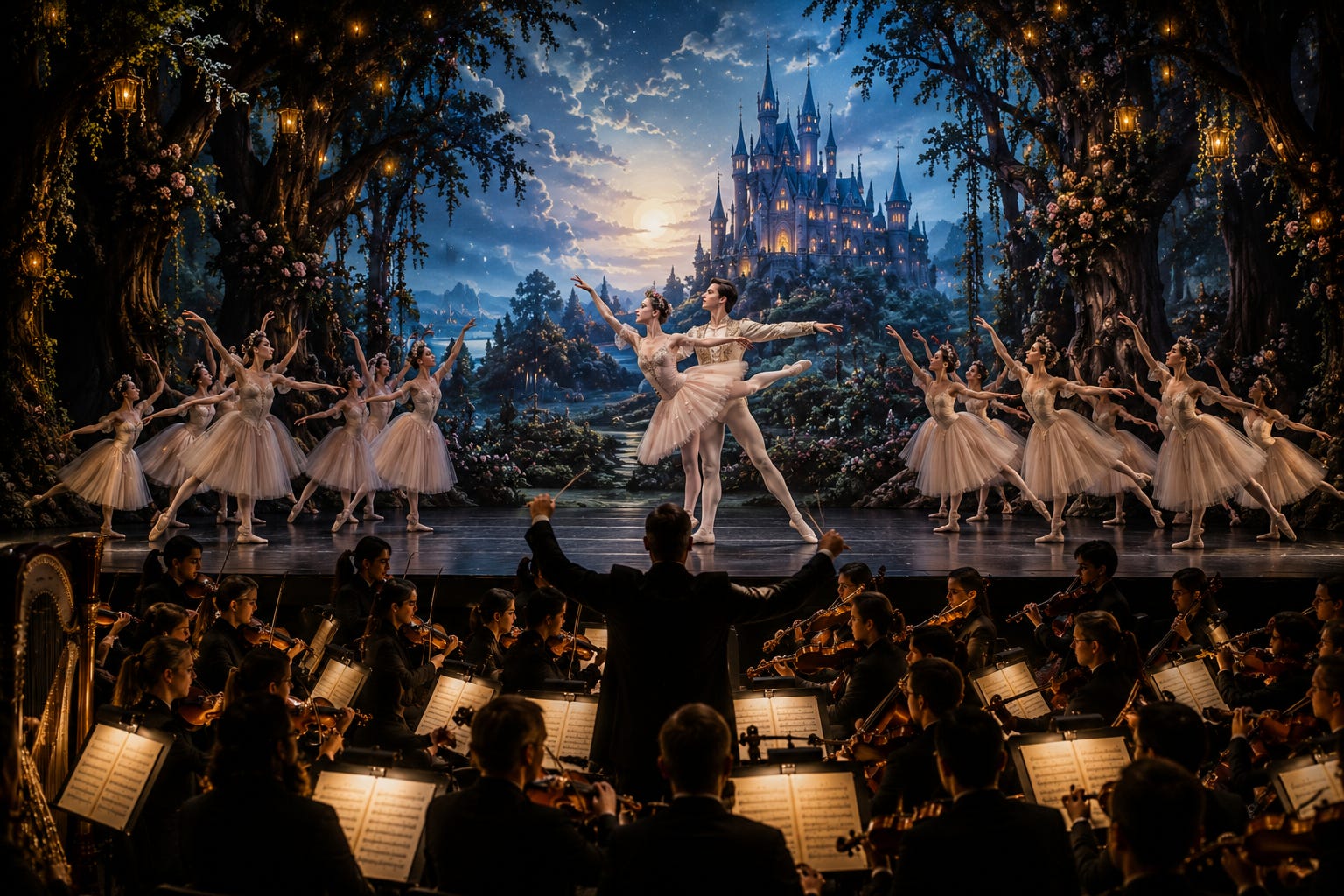
Not every touring production necessarily needs the same model. Could regional productions use smaller ensembles? Could arrangements be specifically commissioned for 10 or 15 musicians rather than 40? Could local professional musicians supplement touring musicians? Could conservatoriums and professional orchestras collaborate? Could selected performances carry a live orchestra while others use recorded accompaniment, with the difference clearly marketed? Could audiences pay a modest premium for the live-orchestra performance? Could sponsors underwrite the orchestra?
Imagine: Tonight’s Orchestra proudly presented by [Sponsor]. There’s a sponsorship asset sitting right there. Could government support specifically fund regional live-music components rather than underwriting an entire production? Could audiences contribute through a Keep This Orchestra Live ticket option? Could schools attending ballet performances meet the musicians beforehand? Could an orchestra rehearsal become a separately ticketed experience?
There are dozens of possibilities once we stop treating this as a binary choice between 40 musicians or a recording.
Test What The Market Values.
Same ballet. Same venue. Two performances. One with recorded orchestral accompaniment. One with a live orchestra. Clearly identify the difference. Then measure it. Which sells first? What premium will audiences tolerate? Does live music increase conversion? Does it increase repeat attendance? Does it attract different demographics? Does behind-the-scenes orchestra content improve ticket sales? Does introducing audiences to musicians increase perceived value? Does sponsorship work?
Adding dozens of touring musicians means adding substantial cost somewhere. So before declaring that every production should carry that cost, we need to know: Will audiences buy it? And if they won’t yet, our job is to figure out how to inspire them to want to.
Someone is always talking about live music as though its survival depends entirely upon protecting supply. Musicians need jobs. Venues need support. Orchestras need funding. Artists need grants.
All true.
But sustainable industries aren’t built only by protecting supply. They are built by creating demand.
Inspire more Australians to buy tickets to experience live musicians. Teach children what an orchestra feels like. Make audiences understand what happens between a dancer and a conductor. Show them the human beings behind the sound. Turn musicians into part of the story. Build experiences around them. Make the difference visible. Make it desirable. Make it worth paying for. And then something interesting happens.
Companies don’t need to be told to employ musicians. Employing musicians helps them sell tickets. That is a completely different economic proposition.
Keep Music Live. Absolutely. But let’s not stop at protecting the job. Let’s build the market that pays for it. Because the strongest protection any musician can have isn’t a petition demanding somebody employ them. It is an audience saying: Hang on. Where’s the orchestra?
Nichola Burton has spent 35 years in the Australian live music industry as co-founder and CEO of The Pushworth Group. Agent, music business strategist and professional stirrer of comfortable assumptions, she writes about the business behind live entertainment — where artists, venues, audiences and economics collide. Her view is simple: if we want to keep music live, we need to give audiences a bloody good reason to buy the ticket.
