

Before we talk about the numbers, it is important to understand the context.
With the winding down of the Live Music Office, APRA AMCOS is now directing much of its advocacy toward one central policy ambition: a federal tax offset scheme designed to support Australia’s live music venues and the industry professionals whose livelihoods depend on them.
This scheme has not yet been approved by the Federal Government. It remains an advocacy position. But the economic case behind it is worth paying attention to.
The report, The Economic Impact of Tax Offsets on the Live Music Industry, prepared by BIS Oxford Economics for APRA AMCOS, does more than argue for government support. It documents something many of us in the live music sector have known in our bones for decades: live music is not a decorative extra for hospitality venues. It is an economic engine.
And one figure says it all.
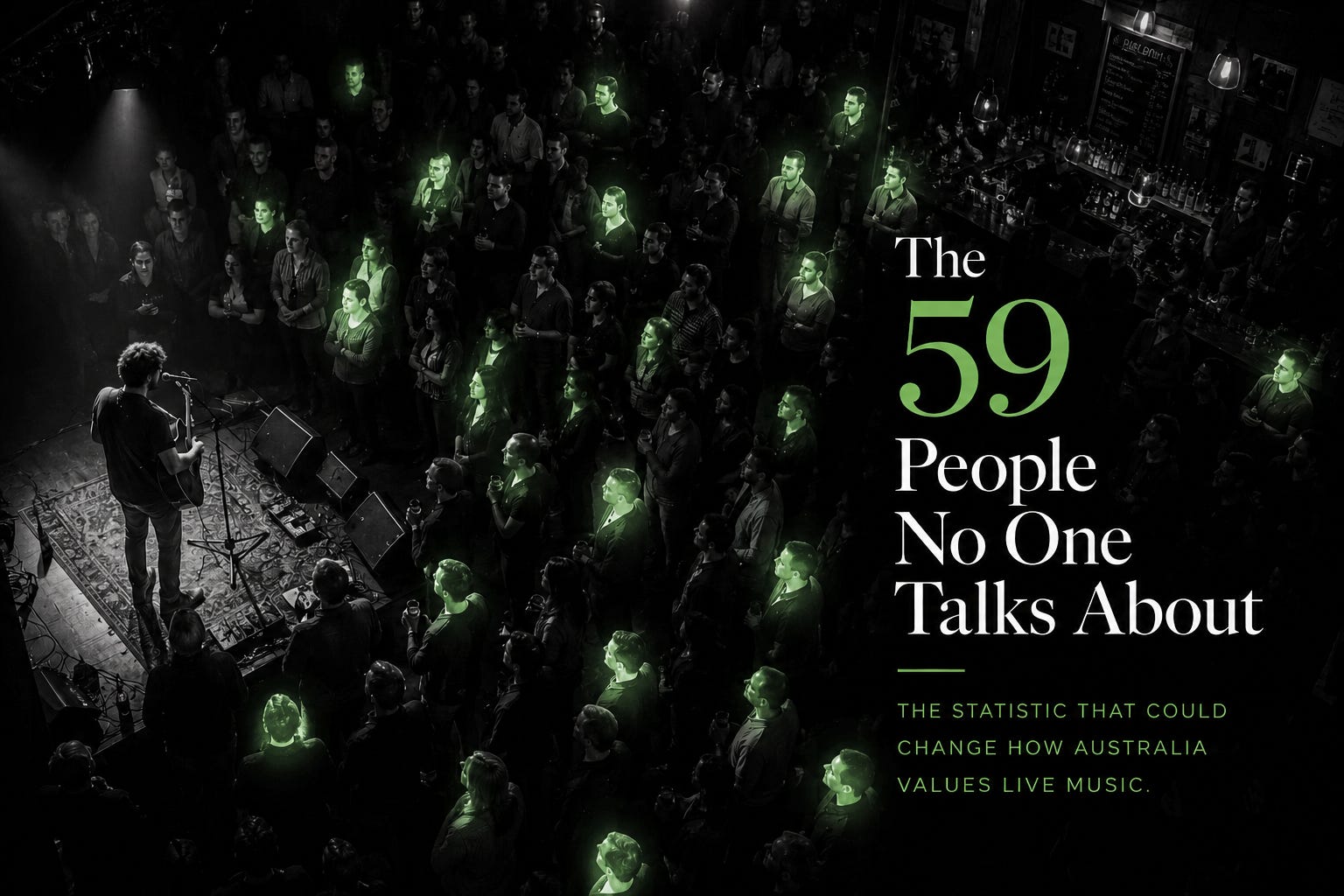
On average, every live music performance brings 59 additional customers through the door.
For years, I’ve listened to people describe live music as a cost. An expense. A luxury. A nice thing to have if budgets allow.
Yet every week, across Australia, thousands of venue owners quietly make the same decision. They book a musician. They book a band. They book a DJ. Not because they’re philanthropists, but because they’re running businesses.
Now, thanks to a comprehensive economic report commissioned by APRA AMCOS and prepared by BIS Oxford Economics, we finally have numbers that explain why.
The statistic that stopped me in my tracks wasn’t measured in billions of dollars. It wasn’t the jobs created. It wasn’t the tax modelling. It was this.
Every live music performance attracts, on average, 59 more customers than a venue without live music.
Read that again. Not one extra customer. Not ten. Fifty-nine. Every single performance.
That one figure changes the conversation.
One of the most interesting findings in the report is that over 85% of venue revenue generated on live music nights comes from food and beverage sales—not ticket sales.
The artist is not simply providing entertainment. They are creating an environment people choose to leave their homes for. They create atmosphere. Conversation. Connection. Energy. The kind of nights people remember.
For hospitality businesses, those 59 additional customers buy meals, drinks, desserts, coffee and cocktails. They bring friends. They stay longer. They come back.
Live Music Doesn’t Sell Tickets. It Sells Hospitality. Live music isn’t sitting alongside hospitality. It is actively driving it.
Another aspect of the report deserves far more attention than it has received. Throughout the report, musicians are not described as employees waiting to be hired. They are recognised as participants in a commercial ecosystem. Businesses. Independent operators. Creators. Touring professionals. Producers. They invest in equipment. They market themselves. They employ crew. They manage transport, accommodation, insurance, production and promotion. They generate economic activity well beyond the stage.
That distinction matters. Because it recognises what many of us working in the industry have known for decades. A professional musician isn’t simply performing songs. They’re operating a business.
Before COVID, Australia’s venue-based live music industry generated approximately $2.4 billion in direct venue revenue, supported over 23,000 jobs, and saw more than 425,000 performances each year.
Then the pandemic arrived. Live performances fell by around 70%. Many artists left the profession altogether. One in seven venues now believe they’ll never return to the number of gigs they once hosted. The report warns that rebuilding isn’t simply about putting bands back on stages. It’s about rebuilding an entire economic ecosystem. One where venues, artists, agents, promoters, technicians, suppliers, accommodation providers, transport operators and local communities all depend on each other.
This report is stating what we have always known. The Live Music Economy Is Bigger Than the Stage
The modelling found that modest tax incentives encouraging venues to host more live music could deliver:
More than 200,000 additional live performances each year.
Around $205 million in additional artist income.
Hundreds of millions of dollars in extra venue revenue.
Thousands of new jobs.
Significant increases in economic activity across hospitality, tourism and regional Australia.
That’s before considering the social value. The friendships. The first dates. The celebrations. The local bands discovering their audience. The regional towns that come alive on a Friday night. Those things don’t fit neatly into an economic model. But they matter.
And perhaps all this time, we’ve Been Asking the Wrong Question? Instead of asking, “Can venues afford live music?” Perhaps we should be asking, “Can venues afford not to have it?”
Because every time a venue chooses live music, the evidence suggests something remarkable happens. On average… Fifty-nine more people walk through the door. Not because government told them to. Not because they had to. Because people are still searching for something that streaming can never replace. A room. A crowd. A song. A shared moment that only exists once.
That’s the quiet power of live music. Not simply as culture. Not simply as entertainment. But as one of Australia’s most valuable small business ecosystems.
And perhaps it’s time we started talking about it that way.
Link to the Full Report - Click Here
For over thirty years I’ve followed the invisible threads connecting artists, venues, agents, managers and audiences. Musoverse is where I explore the business beneath the music—the systems, relationships, economics and ideas that shape Australia’s live entertainment ecosystem.
Nichola Burton is the founder of A Little Pitchy, a design and systems practice dedicated to helping creative businesses uncover clarity, build sustainable infrastructure and strengthen the industries they serve. © 2026
