

There has always been an invisible hierarchy in the music industry. Original artists. Cover artists. Session musicians. Tribute shows. DJs. Songwriters. Venue bands. Festival acts. Music teachers. Agents. Managers. Promoters. Producers. Technicians.
Somewhere along the way we started ranking them, as though one contribution mattered more than another.
But the music ecosystem doesn’t work like that. And it never has.
If there is one thing that struck me while reading APRA AMCOS’ submission to the National Cultural Policy Consultation, it was this:
They don’t describe the industry as a hierarchy. They describe it as a series of intersecting lines, with the artist and the audience always at the centre.
That might sound like a subtle distinction. I don’t think it is. I think it’s the biggest shift in how we’ve talked about music in decades.
For years we’ve treated music as though it sits inside the Arts portfolio. As though it’s a discretionary expense. A grant. A subsidy. Something governments support because culture is “nice to have.”
APRA AMCOS has just made a very different argument.
Music is infrastructure. Not metaphorically. Economically. Socially. Educationally. Commercially.
Think about what actually happens when a venue books live music. The venue earns revenue. The bar staff work. The security company invoices. The sound engineer gets paid. The graphic designer creates the artwork. The photographer captures the night. The accommodation provider hosts the touring act. The rideshare driver takes patrons home. The songwriter receives royalties. The publisher administers rights. The booking agent earns commission. The manager builds another opportunity. The audience has a reason to leave the house.
Nobody succeeds alone.
This is why I become uneasy whenever conversations begin with “real musicians.” Because the truth is far more interesting.
The Saturday night cover band playing four hours of songs everyone already knows.....creates the room where tomorrow’s songwriter learns what connects with an audience.
The DJ keeping the dancefloor full until 2am… ...helps the venue stay profitable enough to book live bands next month.
The tribute show attracts audiences who might never otherwise walk through the doors of a regional venue.
The original artist writes the songs that become tomorrow’s soundtracks.
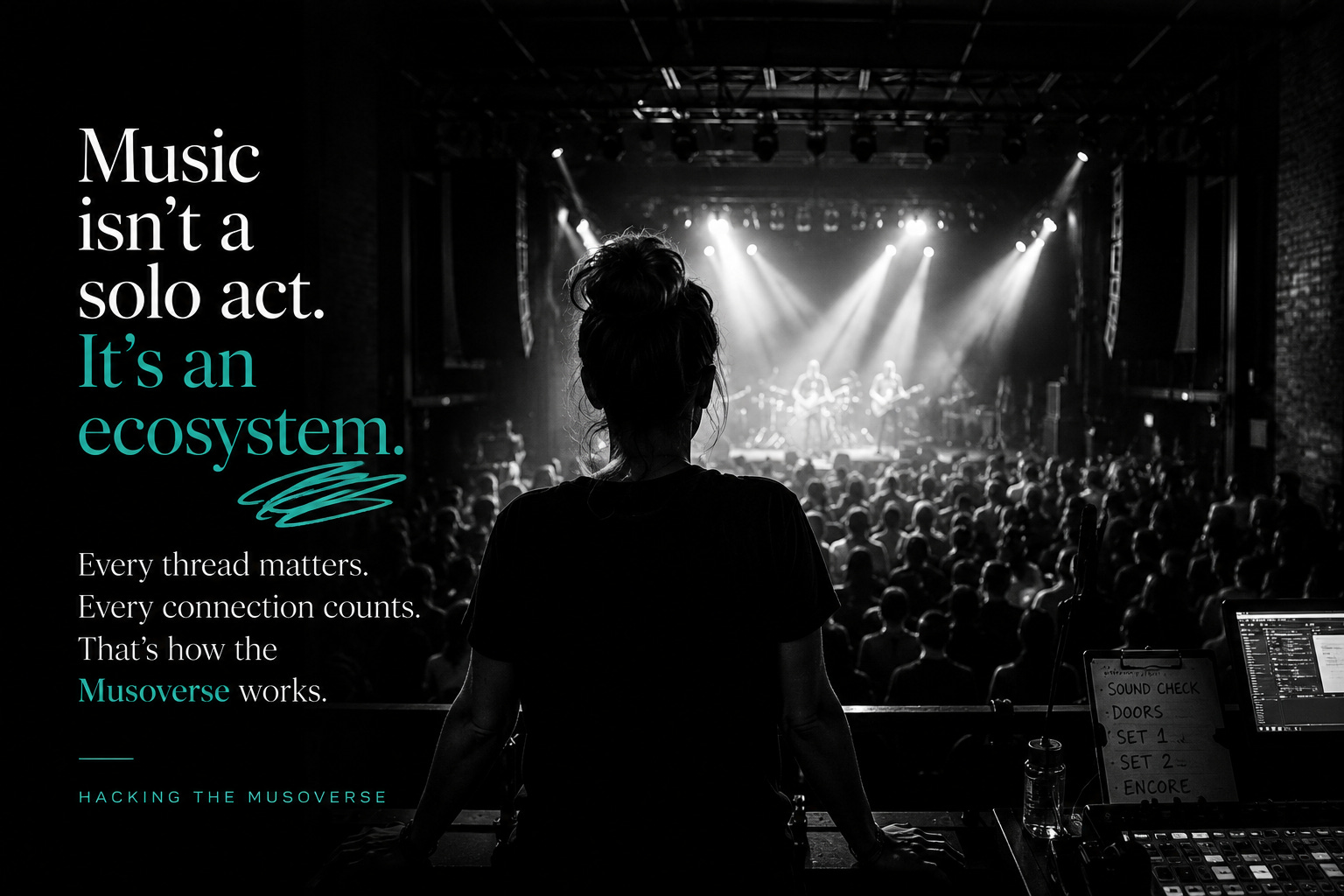
One feeds the next. One doesn’t diminish the other. They’re part of the same ecosystem.
Perhaps that’s why this submission resonated with me. It doesn’t argue for “artists.” It argues for an ecosystem. An ecosystem worth more than $10.76 billion annually. One employing more than 40,000 Australians. One exporting over $1 billion worth of Australian intellectual property to the world every year.
Yet despite those extraordinary numbers, the median Australian music creator still earns only around $14,800 from their craft each year. That isn’t because music lacks value. It’s because we’ve become remarkably good at extracting value from music without always returning it to the people who create the ecosystem.
That’s why this submission isn’t really asking government to fund the arts. It’s asking government to invest in infrastructure. The infrastructure that teaches creativity in schools. That protects copyright in the age of artificial intelligence. That keeps stages open. That helps Australian music be discovered instead of buried beneath algorithms. That supports touring. That strengthens community radio. That builds export markets. That protects First Nations knowledge. That creates places where the next generation can learn.
None of those recommendations exist in isolation. They’re all connected. Just like the industry itself.
In the Musoverse, we spend a lot of time talking how to hack the systems in this industry. Because systems reveal something people often miss.
Every music business—whether you perform your own songs, someone else’s songs, curate playlists as a DJ, manage artists, own a venue, build production, teach, promote or book entertainment—is part of the same operating system. If one part weakens… Eventually the whole network feels it. If one part grows stronger… Opportunity expands for everyone.
Perhaps that’s the most important message hidden inside APRA AMCOS’ submission is to stop asking whether music deserves funding.
Start recognising what music already is. One of Australia’s most valuable business ecosystems.
And like every healthy ecosystem… It survives because every thread matters.
Read the Made here. Heard everywhere. National Cultural Policy submission here.
Written by Nichola Burton. For more than three decades, Nichola Burton has worked behind the scenes of Australia’s live music industry alongside artists, venues, managers, agents and promoters. Through Hacking the Musoverse, she explores the systems that make music businesses thrive—uncovering the connections between creativity, technology, hospitality, economics and human behaviour. Her belief is simple: when we understand how the ecosystem works, every music business has a better chance of succeeding.
Nichola is the founder of A Little Pitchy, where she designs digital systems, strategy and resources that help creative businesses work smarter, grow sustainably and build industries worth inheriting. Copyright 2026
