

I often get asked to speak to music students about becoming employable in this industry. Typically the little faces in front of me are expecting something inspiring about passion, networking and getting their foot in the door. But my very boring answer is all about how music means business instead.
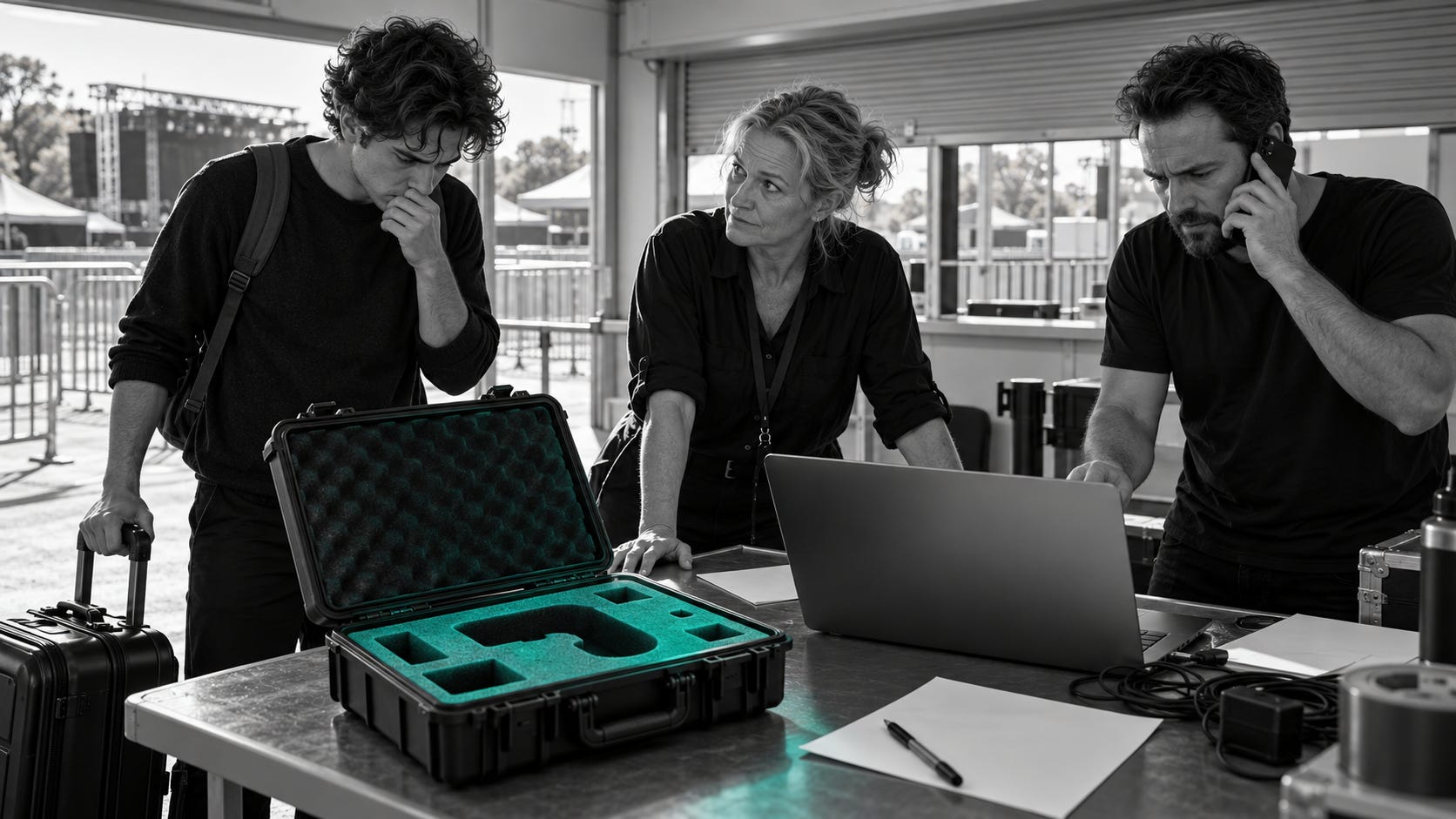
Like it or not, my job is to remind you that for every person you see onstage, there are 200 people elsewhere making that performance possible. Booking it. Selling it. Building it. Testing and tagging it. Staffing it. Checking the money. Explaining, for the third time, which entrance can accommodate a van. Some have spent months preparing. Others have just received a phone call beginning with the words nobody wants to hear: “Funny story.”
Like the time a ticketing company forgot to pack the scanner that needed to be flown up from Sydney before the Brisbane festival opened its box office in three hours’ time? (Yup, that was fun.)
The music industry offers work that is creative, absorbing and occasionally magnificent. It also requires people who can function when the plan has developed a small electrical fire backstage.
Clear communication is one of the most valuable skills in this industry. Who is doing what? By when? For how much? What has actually been agreed? If your email contains six paragraphs of warmth but leaves those questions unanswered, well, Houston, we may have a problem.
Things go wrong. People get sick. Equipment fails. Vehicles break down. Humans enter the wrong dates and times into calendars with extreme regularity. The mistake matters. But what happens next matters more.
A replacement can sometimes be found. A schedule can sometimes move. A client can be called before they discover the problem in front of their guests. “I didn’t want to worry you” is particularly unhelpful when you have thoughtfully saved all the worry for twenty minutes before doors open.
So when I assess whether someone can work in this industry, I want to know whether they can bring me an awkward fact and a gut feeling that something just doesn’t add up, while it is still manageable. You do not have to arrive with every answer. Just tell me what happened, what you have checked and what help you need.
We can work with that.
The hard reality is that this industry is not for the faint-hearted. I cannot tell you how many times I have forgotten lyrics while trying to catch a security guard’s attention because a fight was developing on the dance floor. Try mentally reconciling ticket sales against the heads in front of you during a guitar solo. Imagine calling for available artists to find a replacement for other gigs in between your own songs.
Welcome to the industry training ground.
But it taught me to notice the whole room: the performer, the audience, the staff, the exit, the person whose behaviour is changing. And it also taught me something less flattering about how events can operate.
In most venues or industry organisations there is typically one person quietly compensating for every gap that can make a fragile arrangement look perfectly functional. Everyone has a f*cking great night. The exhausted person goes home. The gaps remain. The truth is that when things go wrong, this is the very experience that should help you build better preparation, clearer responsibilities and workable backup plans. Otherwise, you spend your career becoming exceptionally good at surviving the same preventable problem. Groundhog Day 101.
Another element to consider while working in this industry is that a full bar can still lose money. There can be applause, super hot Insta’s and a queue at the bar while the event budget quietly expires in a spreadsheet in the back office. Ticket revenue has to cover costs. Travel costs money. Rehearsal takes time. Production does not become free because everyone enjoyed themselves. So whatever role you want, learn enough about the numbers to understand how your decisions affect them. Build a budget. Read an invoice. Check what a fee includes. Understand the difference between money expected and money received.
If you are booking a show, understand why that act suits that audience in that room. If you are marketing it, know what action the campaign needs to produce. If you are coordinating it, understand what happens to the budget when the schedule changes. Your taste in music is welcome. We still need the figures.
Another thing to truly evaluate for this industry is the whole “easy to work with” definition. There is a healthy version: prepared, respectful, clear, reliable and willing to collaborate. There is also a version that means available at every hour, reluctant to discuss payment and happy to absorb work nobody mentioned until you arrived. Set your boundary realistically and early. Establish what you are agreeing to. The duties. The hours. The supervision. The payment, where applicable. The point at which the arrangement ends.
And remember that the person wearing a lanyard is still a human.
Oh, how I have witnessed some truly awful self-entitlement in this industry aimed at the people behind the scenes making it happen. Be aware that sometimes, musicians get access to a dressing room and start behaving as though they have inherited a minor European principality. Meanwhile, the person being spoken down to may be the one who knows where the missing equipment is, how the loading dock works or which circuit has tripped. So my advice is always to treat each other respectfully no matter what. And listen. Listen because the human you spoke to may just know something you need. Being shouted at is not advanced industry training.
Pressure calls for clear decisions. Humiliation generally adds another problem to the list.
So what makes someone employable in this industry?
Demonstrate that you can finish a task. That you can read the brief, check a detail, keep information confidential and ask before making a promise on someone else’s behalf. Show that you understand your part well enough to see how it may influence the next person. Build practical skills. Writing, spreadsheets, budgets, scheduling, design, research, and equipment knowledge—choose the ones your intended role needs and put them to use. Keep evidence of what you have delivered.
Stay curious enough to learn when the tools change. Have enough discernment to know when a tool has produced complete garbage (cough AI). Above all, be accountable but without volunteering to carry the entire industry on your back.
There is enormous satisfaction in watching a room come alive because people have done their jobs well. The audience gets to disappear into the music. That is the point. If you want to help make that happen, start small. Take on a clear responsibility. Ask the awkward question early. Deliver what you promised.
And be part of the solution not just when Music Means Business but when the sh*t hits the fan!
Nichola Burton has spent more than three decades performing, booking, managing and producing live music—and untangling what everyone thought someone else was handling. Through coaching, mentoring and Musoverse, she works with emerging music industry professionals to build the skills, commercial judgement and backbone to turn their passion into a sustainable career. Copyright 2026
