
A song release without a pitch deck is hope marketing.
A song release with a structured, intelligent pitch deck is leverage.
If you want DSP editors, radio pluggers, venues, publicists, sponsors, agents — or even your own team — to take your release seriously, you need to present it like a campaign, not a vibe.
Below is your 18-page blueprint for a release-ready pitch deck.
And yes — I’ll give you a free template structure you can build from.
1. Cover Page – The Signal
Purpose: Immediate positioning.
Include:
Artist name
Song title
Release date
Strong hero image
Tagline (one-line positioning statement)
This page sets the commercial tone.
2. The Press Release Page
Purpose: Narrative clarity.
Include:
Headline
Summary
Who / What / When / Where / Why
Short quote
Call to action
This becomes the spine of the campaign messaging.
3. History & Recent Activity
Purpose: Demonstrate momentum.
Include:
Latest tour/concert dates
Regions performed
Ticket sales metrics
Audience growth
Repeat bookings
Buyers back movement, not nostalgia.
4. Biography
Purpose: Context and credibility.
Short. Focused. Strategic. Position:
Genre lane
Comparable artists
Key achievements
Industry milestones
5. Marketing Mix Overview
Purpose: Show campaign intelligence.
Outline your 8-week campaign including:
Radio plugger
Publicist
Paid advertising
Song servicing platform
Key influencers
Social media
Website
Mailing lists
Podcasts
Meet & greets
Ticketing links
This tells stakeholders you’re not winging it.
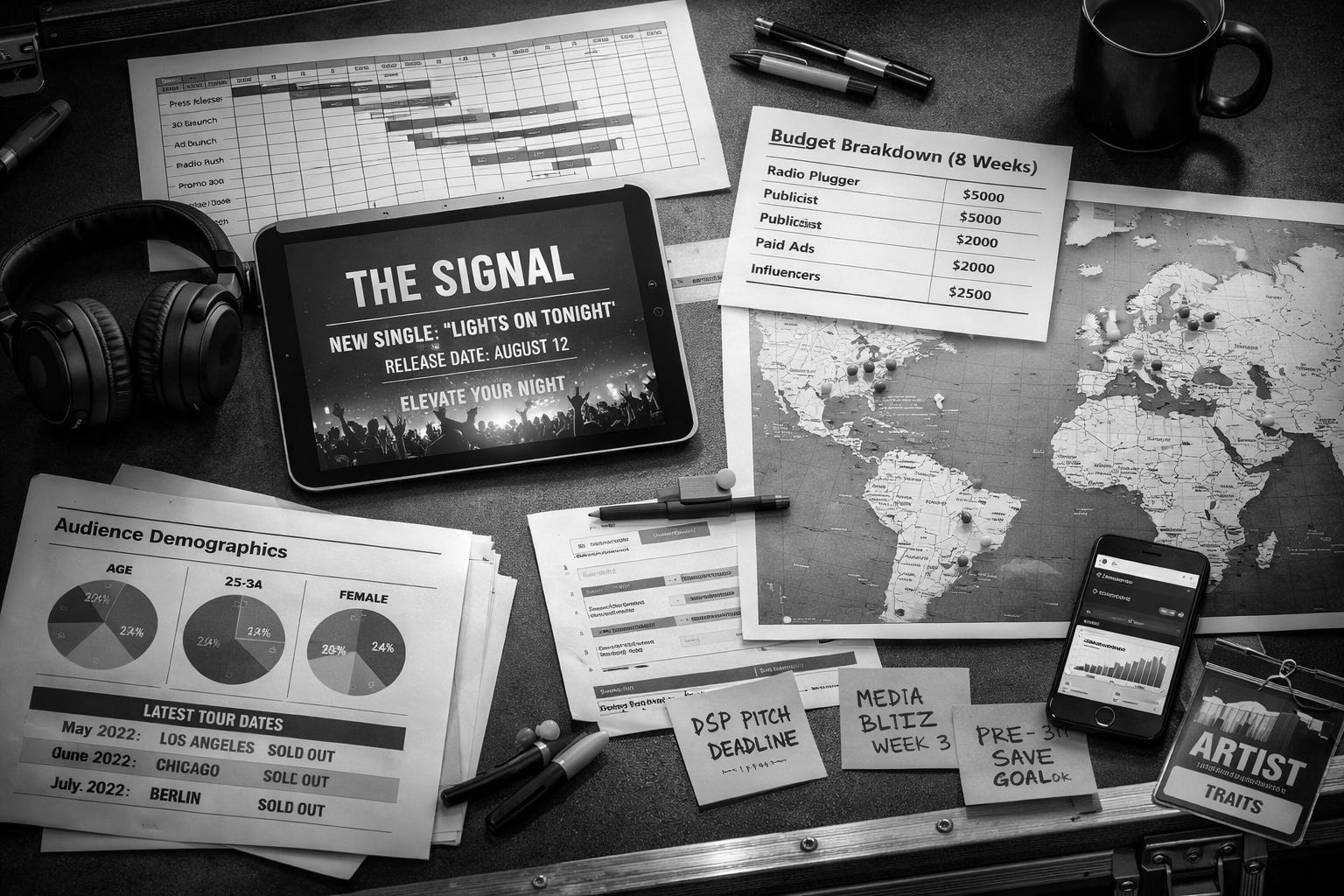
6. Budget Breakdown (8 Weeks)
Purpose: Show financial strategy.
Example structure:
Activity
Budget Allocation
Radio Plugger
$5000
Publicist
$5,000
Paid Ads
$2,000
Influencer Partnerships
$2,500
Content Production
$1,000
This highlights:
Intent
Commitment
Commercial realism
Serious releases cost money.
7. Collateral Timeline (Gantt Chart)
Purpose: Operational discipline.
Display:
Week-by-week content drops
Press distribution
Ad launches
Influencer activations
Radio servicing
Contest launches
This shows sequencing — not chaos.
8. Audience Skew (Demographics)
Purpose: Data-backed targeting.
Include charts showing:
Age distribution
Gender split
Top cities
Engagement platforms
Data builds confidence.
9. Global Audience Map
Purpose: Geographic leverage.
Display:
Countries with streaming traction
Listener concentrations
This matters for:
DSP pitching
International PR
Tour routing
10. Fan Base Mix Profile
Purpose: Commercial targeting clarity.
Define:
Age bracket
Occupation type
Spending behaviour
Media consumption habits
Social platform preference
Example:
25–34 creative professionals. Urban-based. Spotify-heavy. Instagram and TikTok engaged. Attend boutique festivals.
This guides ad spend and partnerships.
11. Release Drivers Schedule
Purpose: Track campaign intensity.
Create a timeline showing:
Press release drop
First ad launch
Radio push
Contest activation
Influencer content
Behind-the-scenes release
Live performance clip
Each driver is tied to a KPI.
12. Contest Marketing Strategy
Purpose: Engagement amplification.
List potential activations:
Cover art redesign contest
Guess the lyrics
Dance-off challenge
Listening party giveaway
Fan art feature
Meet & greet passes
Engagement fuels algorithmic lift.
13. Merchandise Page
Purpose: Revenue extension.
Display mockups:
T-shirts
Caps
Tote bags
Lanyards
Limited edition drops
Merch supports brand memory.
14. On Tour Activation
Purpose: Cross-leverage.
Detail:
Local press
Radio stops
Meet & greets
Social takeovers
Street team activation
Ticket giveaways
Touring multiplies release exposure.
15. Style Guide
Purpose: Brand consistency.
Include:
Colour palette
Typography
Logo variations
Image style references
Graphic examples
Consistency builds recognition.
16. Digital Ecosystem
Purpose: Accessibility. Provide clickable links for:
Website
Social Media Platforms
Linktree
Spotify
Apple Music
YouTube Channel
Patreon
Substack
Podcast
Pinterest
Make discovery easy.
17. Contact Page
Purpose: Professional accessibility. List including Logo, Name, Email and Mobile:
Management
Agent
Publicist
Booking contact
This signals readiness for scale.
18. Closing Slide – The Strategic Ask
Purpose: Clarity of intention. End with:
Release date reminder
Key objective
Call for support
Streaming pre-save link
Simple. Direct. Actionable.
Why a Pitch Deck?
A pitch deck does three things:
Organises your thinking
Demonstrates campaign intelligence
Signals professionalism
In today’s music marketplace, talent is assumed.
Structure is differentiating.
Feel free to use our Pitch Deck template. (Click Here)
Written by Nichola Burton. I work in partnership with Agents, Artist Managers and Event Producers, who juggle a diverse range of relationships in the Musoverse, to curate, manage and measure data in systems, experience, creative and content to support the entire Musoverse operation in my enterprise A Little Pitchy Copyright 2026